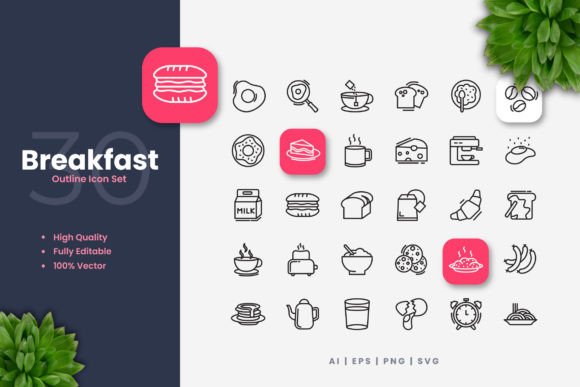
A Designer's Real-World Review of Breakfast Icons for Embroidery
Let’s talk about using Breakfast Icons in real embroidery projects. As someone who stitches for clients, runs a small shop, and designs for makers, I look at a design file with a very practical eye: how will this actually stitch out, and what kind of finished product will it create? Today, I’m imagining the Breakfast Icons design not on a screen, but on fabric.
The First Impression: Where This Design Belongs
The simple and clean description is accurate. This set has a friendly, almost nostalgic personality. It feels warm and approachable. The shapes are straightforward, without overly intricate details. This is a huge plus for embroidery. Complex, tiny vectors often translate into dense, problematic stitch areas, but this icon set suggests a cleaner path. My immediate thought was: this belongs on kitchen towels, aprons, tote bags for a brunch cafe, or a child’s nursery pillow. It creates a mood of comfort and everyday joy, not high-tech sleekness. That visual personality is its biggest asset for handmade products.
Putting Breakfast Icons into a Real Project Scenario
Picture this: a client wants a set of custom embroidered tea towels as a wedding gift for a couple who loves cooking. They want something personal but not overly sentimental. I pull up Breakfast Icons. The coffee cup, the egg, the toast—these are universal, charming symbols. I can select a few, arrange them neatly along the hem, and the project immediately has a cohesive, custom feel. Because the design is described as resizable and editable, I can adjust the scale to fit the towel’s dimensions perfectly. The clean lines promise good stitching clarity on a textured linen fabric. This is the kind of thinking that turns a digital embroidery file into a valued, personalized gift.
How It Performs Across Different Embroidery Applications
For custom apparel like sweatshirts or t-shirts, these icons would work beautifully as a small cluster near the chest or sleeve. Their simplicity means lower stitch density, which is better for stretchy fabrics. On a tote bag, they could be larger, more prominent, becoming a central design element. For baby embroidery on a blanket or bib, the friendly icons are safe and appealing. As an embroidered patch, they’d be clear and easy to apply. I’d also consider them for small shop merchandise—aprons for a boutique bakery or caps for a coffee shop—where they act as subtle, consistent branding. They lend a professionalism that feels handmade, not generic.
Where to Use Breakfast Icons With Care
Even clean designs demand forethought. On very small hoop sizes, the icons’ internal details—like a suggestion of butter on toast—might need simplification. Embroidering on dark fabric requires careful thread color contrast planning; a pale yellow egg on a black sweatshirt will need a bold thread choice. Textured fabrics like thick wool can blur simple shapes; a good stabilizer is crucial. Applying them to curved surfaces like caps means testing the layout to avoid distortion. The design’s strength is its clarity, so preserving that on tricky bases is key. Always test on scrap fabric first.
The Impact on Your Finished Product and Customer
Using a well-executed, clean icon set like this elevates your finished product. It increases product value because the design looks intentional and crisp. For an Etsy seller or someone at a craft fair, this boosts customer trust—the item looks professionally conceived. It enhances giftability and recognition; people instantly understand the theme. For your craft business, it aids brand consistency if you use a similar style across different items. Ultimately, it creates stronger buyer engagement because the design is relatable and well-made.
Practical Notes for the Embroidery Designer
Before you stitch, here’s my checklist. Review stitch density in your software after importing the machine embroidery design; simple icons shouldn’t be overly packed. Confirm hoop size suitability for your project. Inspect small details in a preview to ensure they’ll translate to satin stitch or fill stitch cleanly. I always test it in black and white mockups to judge form alone, and compare light and dark fabric backgrounds digitally. Use the proper stabilizer for your chosen fabric texture. Crucially, check whether the design works for both personal and commercial projects, and confirm licensing before selling finished items. The product description mentions use for websites and print, but for physical embroidered patches or apparel decoration, you must verify the license covers that.
A Final, Confident Assessment
Breakfast Icons feels like a reliable, versatile design asset. It’s not a flashy, complex pattern, but in the world of embroidery projects, that’s often exactly what you need. It provides a foundation for creating charming, saleable, and giftable items without fighting against the limitations of thread and fabric. Whether for a holiday embroidery gift, a line of boutique kitchenware, or a personalized baby item, this set has the straightforward, friendly character that stitches out well and connects with people. Just remember the golden rule: always test on scrap first, and know your license. Then, stitch with confidence.